 WooCommerce Post-Purchase Survey: 7 Questions, When to Ask and What to Do Next

Survey Bias: 16 Types, Examples and How to Avoid Each One
One table of 16 survey biases, grouped by where they enter a study, each with an example and a fix, plus a checklist for design, sampling, fielding and analysis.
How to write survey questions people can answer, choose a rating scale, keep the survey short and avoid bias, with examples you can copy.
One table of 16 survey biases, grouped by where they enter a study, each with an example and a fix, plus a checklist for design, sampling, fielding and analysis.
Twelve rules for good survey questions, each with a bad and a better version, a checklist for reviewing questions an AI drafted, and how to settle order, length and the pilot test.
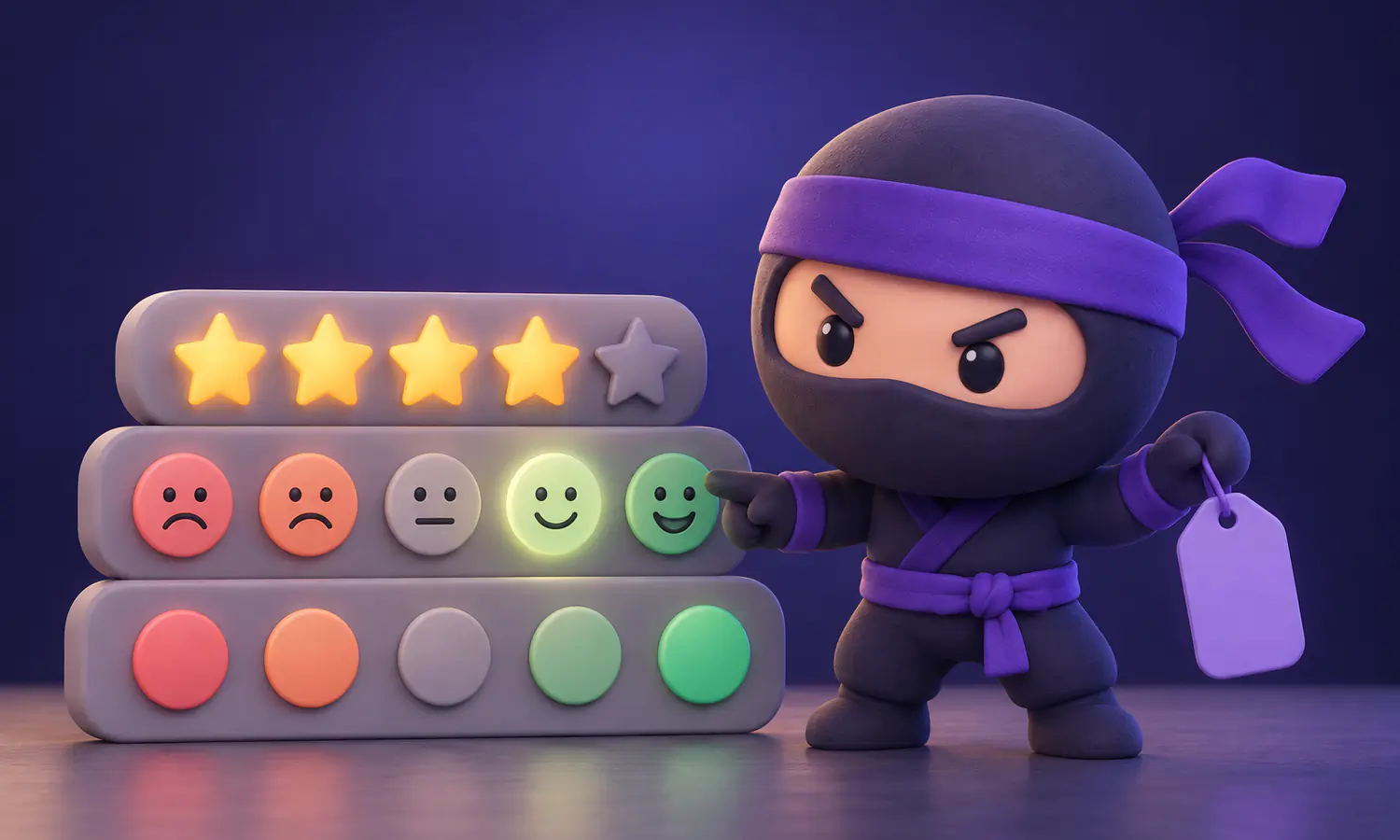
Rating scale examples you can copy: labels for every point of 1–5 and 1–7 scales, descriptions for each number of a 1–10 scale, the 0–10 scale, how many points to use, whether to add a neutral midpoint, how to convert between scales and how to report the results.

Designing a survey for a four year old and one for a fifteen year old are not the same task. This guide breaks down question wording, scales, length and consent by age band, plus the legal frameworks that apply before anything goes to a child.
Points and badges make the dashboard look better while making the answers underneath worse. This guide separates the gamification that actually helps, lowering perceived effort, from the reward layer that quietly recruits the wrong respondents and trains everyone to rush.

Three questions is not a smaller ten-question survey, it is a different instrument with its own rules. What each constraint buys, how to pick the one question that matters, how to read a small sample honestly, and how to run several without wearing out your users.

Turning off the name field is not the same as building an anonymous survey. A practical guide to the four privacy levels, how anonymity actually leaks, the minimum group size rule, and how to close the loop with people you cannot identify.
How to build an online quiz that grades itself: the difference between a quiz, a survey and a test, six practical steps, point weighting and pass marks, plus the mistakes that quietly ruin the results.
The hands-on side of survey work: how to get from a blank screen to answers you can act on, including the pilot test, the distribution channel you pick and what to do once responses land.
The people who start your survey and quit halfway are your most painful loss. Here is why they leave, where they drop off, and 20+ practical ways to keep them to the end.
A practical guide to the types of surveys, sorted by goal, method, channel and cadence, the question types they are built from, and how to go from a goal to a finished set of questions.
Discover what the Likert scale is, how it works and why it’s one of the most widely used tools in research